1 Introduction
QVD Utils enables reading/writing QVD files without a need to use Qlik Sense or QlikView. Also provides metadata from QVD/QVX header. It is useful when you need to convert various sources directly to/from a QVD file and you don’t want to overload your Qlik server by processing many, or large, QVD files.
1.1 QVD Utils used standalone

Having QVD Utils without any other EVL Microservice contain these scripts:
- csv2evd – generate EVL data definition file (EVD file) based on CSV
- csv2qvd – convert CSV to QVD
- qvd2csv – convert QVD to CSV
- qvd2evd – generate EVL data definition file (EVD file) based on QVD
- qvd-header – get information from QVD header, like field names as JSON, or number of records
1.2 QVD Utils in combination with other Microservices
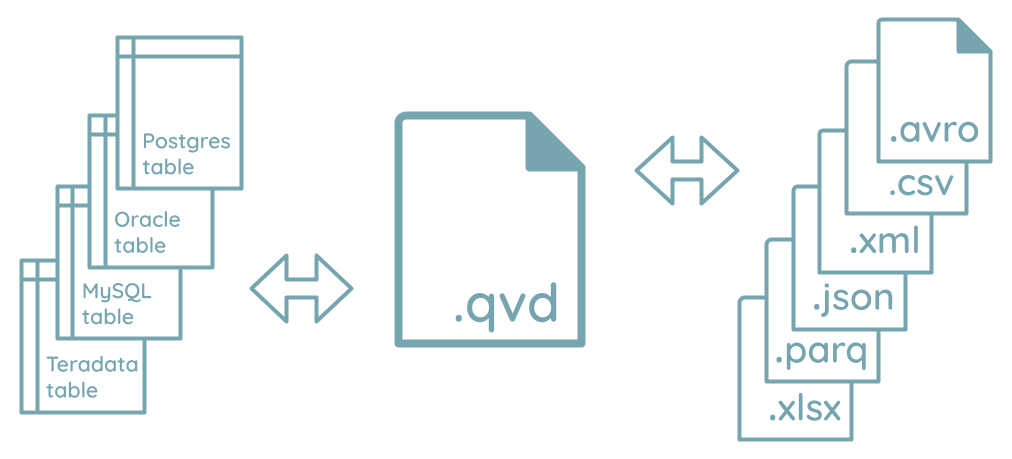
In join with other EVL Microservices, like Hadoop Utils or EVL Data Hub, you can also read/write:
- various file formats: Avro, json, Parquet, xlsx, and xml,
- database tables: MySQL, PostgreSQL, Oracle, SQLite, Teradata, or any other by ODBC.
1.3 QVD Utils with EVL Tool
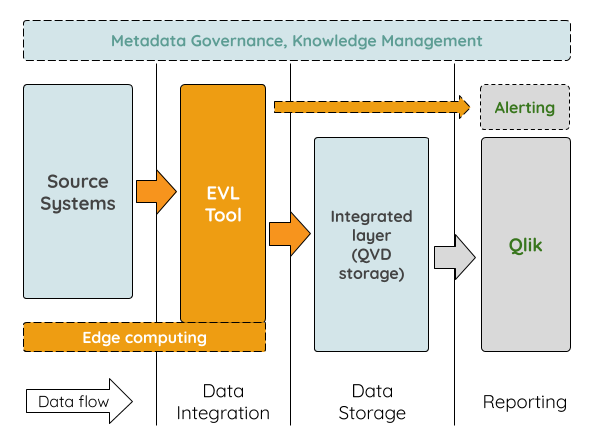
Together with EVL Tool (an ETL tool) it can be used for example in QVD-based architecture: